Posts

Showing posts with the label ak47

The RGG: 1 Year Later

Image
Introduction: When I started this blog just about a year ago, I started it just as a brain dump for all of the accumulated knowledge I had built up around the topics of firearms and shooting. I was in a transitional period of life. I had just graduated college with a degree that didn't really give me any direction. I was entering a job that I tolerated as a way to make money, so I wanted to put some time into something that I actually cared about. I try to take this blog pretty seriously and hold myself to making a weekly post. I don't always accomplish this, but I think I do a decent job at it.  I tried to do my best to emulate something that I would want to read and look at, while having no idea how to make a blog halfway successful. I found it funny when I first started out. When I first started posting links on social media, people thought that my accounts had been hacked and that I was just posting spam. Now, on Mondays people ask me what today's post is about and ask ...

5.45x39mm Ammo Variants

Image
Introduction: First introduced along with the Russian AK-74, the 5.45x39mm cartridge has served as Russia's standard service round for decades. The 5.45 cartridge was developed at a time when military forces around the world were beginning to favor sub-6mm cartridges. This idea was really proven due to the performance of NATO's 5.56mm cartridge. Russia wanted in on this performance improvement, but wanted to do it in their own way. The 5.45 is a very high velocity round, with mild recoil and excellent penetration depending on the specific projectile. By switching to a projectile that is less than half the weight of a standard 7.62x39mm bullet, Russian soldiers are able to carry more ammo a further distance, and the higher velocity allowed for an effective range more on par with Western counterparts. I'm going to delve into some of the different 5.45 variants that are currently in use and in production, and look at some of the different roles they ...

AK Optics Options

Image
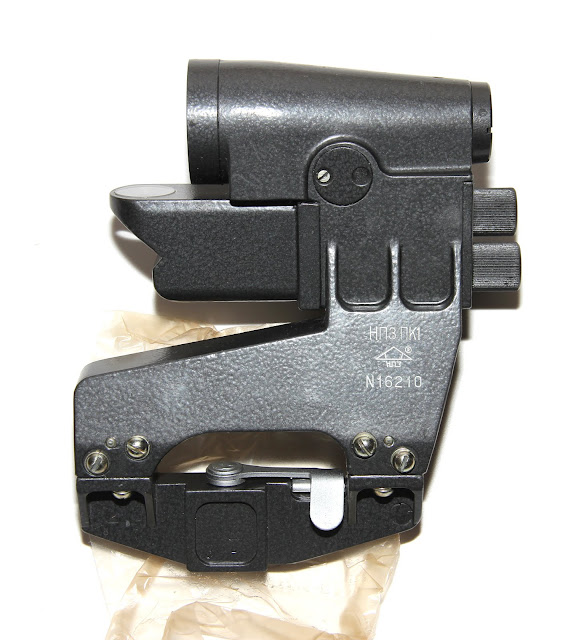
Introduction: When the AK rifle was first introduced, there was no need to mount an optic on it. The rifle was designed to be cheap, simple, and able to be distributed in large numbers. As the decades went on, and Russia's army turned from a peasant army into a professional army, force multipliers like optics have become much more of a necessity. The problem the Russians found though was that they couldn't put anything right on top of the rifle because of the dust cover. This led to the development of the side-rail mount. Since this, there have been a multitude of different options for mounting optics. There are now products for pretty much everything on the top of the rifle to allow for mounting optics, including dust covers, gas tube mounts, and rear sight block mounts. These, along with the side rail mount all have their advantages and disadvantages. I'll try to give a brief overview of each, so hopefully you learn something. Details: We'll start with th...

AK Magazine Variants

Image
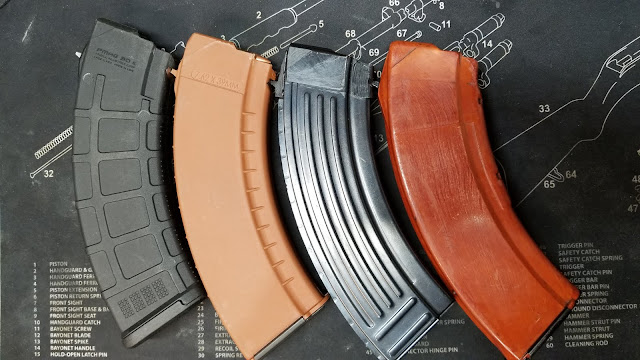
Introduction: AK mags come in all shapes and sizes. Even just in metal mags, you have slab side, two ribbed, three ribbed, and aluminum magazines, just to name a few. And after that, you have all the polymer and "Bakelite" variants. I'm just going to go into some detail on a couple of that mags that I happen to own and some of the interesting background surrounding them. I'll go over some of the interesting features that some of the mags have, as well as a little bit of history. I also won't just look at AKM magazines, I'll also take a look at the couple different mags I have for my SLR-106. Details: Steel Mags The three-ribbed, stamped steel mag is one of the quintessential AK mags. When someone thinks of what an AKM magazine looks like, more often than not it's one of these.This one in particular though because it is a Yugoslavian pattern magazine, meaning that unlike other AK mags, it has a bolt hold-open. The AK rifle does not nor...

The "Assault Rifle" Concept

Image
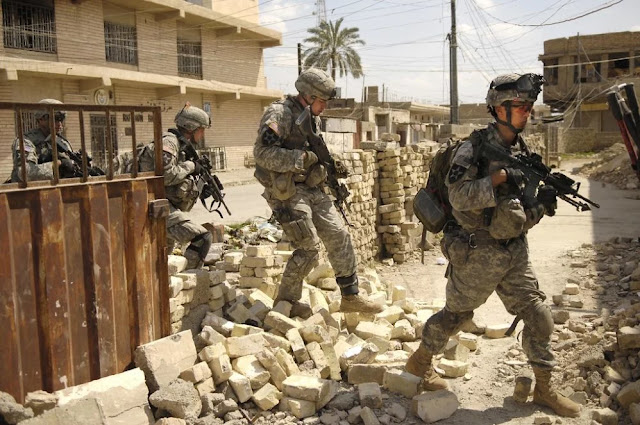
Source Introduction: The assault rifle as we are familiar with it today has been a staple of warfare since the end of the Second World War. Assault rifles are typically defined as being select-fire rifles that fire an intermediate cartridge, such as 5.56 or 7.62x39mm. There are also "battle rifles" that are in slightly larger calibers such as 7.62 NATO. However, because Assault Rifle is a more well-defined term, and 7.62 NATO was designed as an 'intermediate' cartridge, I'm going to include rifles such as the FAL and SCAR-H under the moniker of "Assault Rifles". I'm going to try to give a brief overview of the history behind the assault rifle concept, and how the idea spread to be the definition of a modern service rifle. Details: In order to understand the necessity of the assault rifle, you need to go back to WWI and WWII. WWI was a war of outdated tactics combined with modern warfighting technology. For US forces, there was a heavy e...

3D Printed Guns

Image
Introduction:  3D printing opened up opportunities for hobbyists to develop and create whatever they wanted. The technology has evolved and progressed to include things such as carbon-fiber impregnated polymers, metal inserts, and UV resin. 3D printing technology has expanded to the field of firearms.In fact, there is now an entire subculture of the gun community dedicated to the progression and development of 3D printed firearms. I'm going to do my best to give a brief overview of the really interesting things that have come out of the 3D printed gun community, as well as go into some of the controversy surrounding 3D printed firearms and what they mean for the 1st and 2nd Amendments. Details: 3D printed firearms tend to come in a couple variations. First, there are the firearms that have 3D printed components, but incorporate many different crucial firearm components that aren't regulated in many instances. This would include, for example, 3D printed glock frames th...

The AK-100 Series

Image
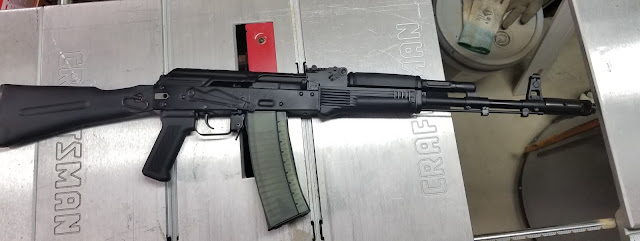
An Arsenal SLR-106, the closest thing to an AK-101 readily available in the US Introduction: The AK-100 series of rifles has its roots in the AK-74M, Russia's modernized variant of the AK-74 platform. The AK-100 series has many variants in some of the most popular calibers, such as 7.62x39mm, 5.45x39mm, and interestingly, 5.56x45mm NATO. The AK-100 series is primarily intended for export and use by domestic police and special forces in Russia. In addition to Kalashnikov's typical offerings of 7.62x39mm and 5.45x39mm, the inclusion of 5.56 creates an interesting crossover between East and West. This creates a rifle that could be attractive to countries with large amounts of 5.56 NATO ammunition that also want the reliability and simplicity of the AK platform.  Technical Details: Because of the AK-100 series' technical similarities to the AK-74M, I'm going to touch on the common features seen on both rifles variants. First off, being the modernized take on ...

The "Yugo" M70 Series

Image
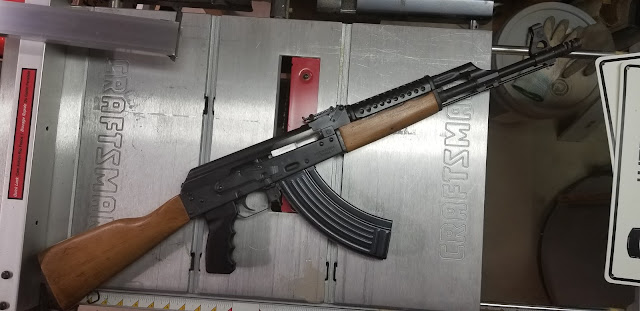
Introduction The AK variants of the former Yugoslavia have a special blend of unique features that I've always found makes them just that little bit more interesting. Whether it's a civilian or a military variant, they're instantly distinguishable from their kalashni-cousins by their unique three-slotted handguard, but their differences go quite a bit deeper. Pictured above is a civilian M70 N-PAP made by Zastava in Serbia and imported by Century Arms. I've added a couple of cosmetic touches, includes a Khyber Customs "Cheese Grater" upper handguard, and a Definitive Arms Fighter Brake . Technical Details The M70 series of rifles (excluding the M76 and M77) are very functionally similar to the typical AKM in that they're chambered in 7.62x39mm, and have all the features you'd expect on an AK, such as the right-side charging handle, paddle mag release, and safety selector. The M70 series has many atypical features that set it apar...